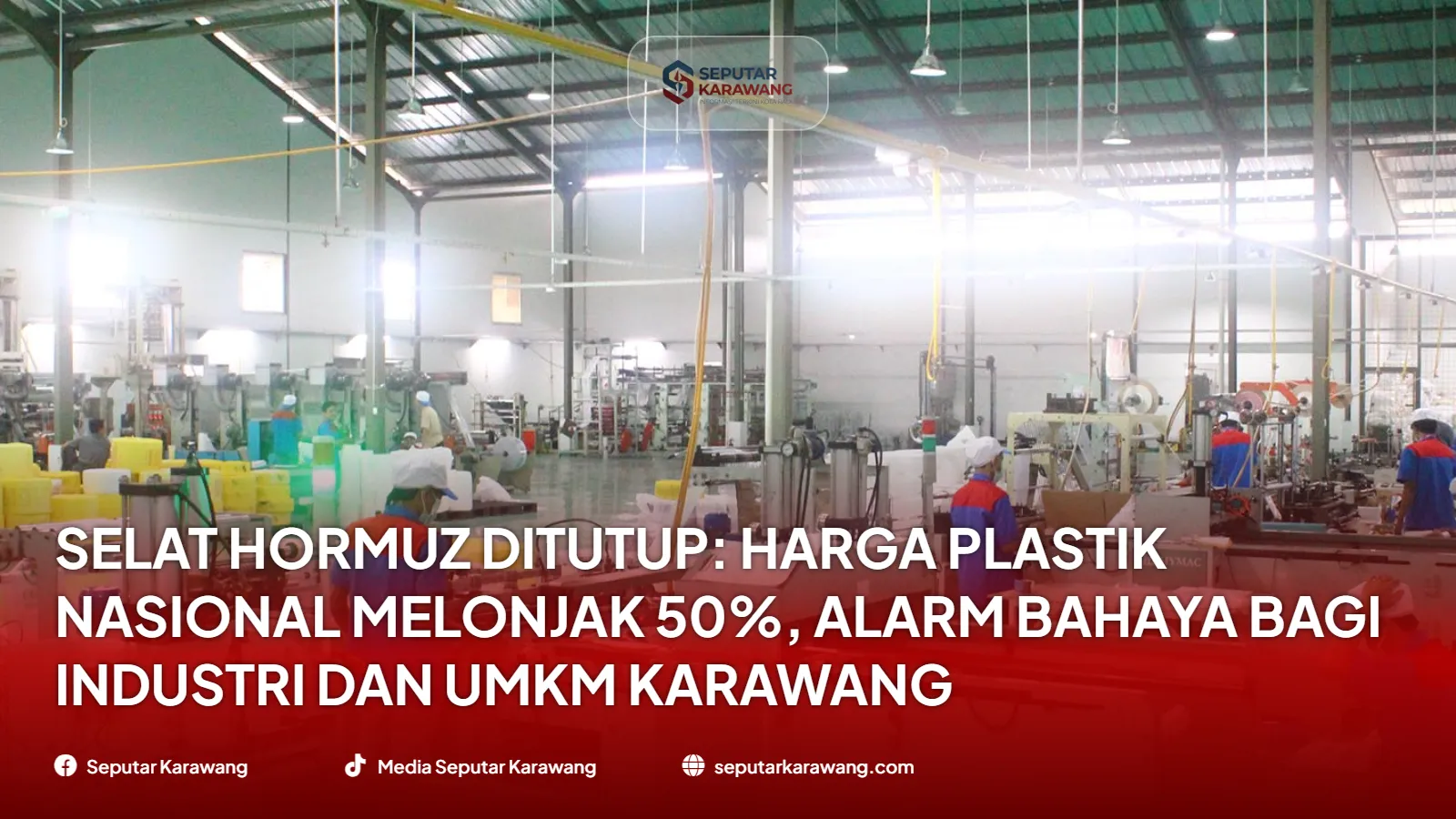
Seputarkarawang.com - Karawang, The escalation of conflict in the Middle East which resulted in the closure of the Strait of Hormuz began to trigger severe shocks in the national plastic industry supply chain. The scarcity of raw materials followed by price increases of up to 50% has created severe pressure for business actors throughout Indonesia. The General Chairman of Ahindo, Henry Chevalier, revealed that this supply crisis has not only triggered a massive increase in production costs, but also opened up the real risk of mass layoffs (PHK) in the downstream industrial sector which is highly dependent on imported raw materials via international shipping routes. Nationally, this condition was made worse by the force majeure policy of the world's upstream industry which cut supplies by half. Considering that the domestic petrochemical industry is only able to meet around 50%–60% of national needs, dependence on the Strait of Hormuz route is a weak point that triggers inflation in various sectors. This increase in raw material prices automatically spreads to the price of final products, from food and beverage packaging (mamin) to pharmaceutical products, which threatens people's purchasing power at the central level down to industrial buffer areas.
This national impact is predicted to be felt much more contrastingly in Karawang Regency, which holds the status as the largest manufacturing center in Indonesia. With thousands of factories operating in industrial areas such as KIIC, KIM, and Suryabuat, the increase in plastic packaging prices will trigger a drastic increase in operational costs for local manufacturing companies. The threat of layoffs in Karawang is a real risk that haunts thousands of factory workers if the downstream industry is no longer able to bear the burden of raw material prices which are increasingly out of control due to the geopolitical crisis.Not only the large industrial sector, this blow is also certain to paralyze culinary MSMEs in Karawang. Plastic is the lifeblood of local food and beverage product packaging, so an increase in the price of plastic bags and plastic containers of up to 50% will force small traders to increase selling prices or reduce portions in order to survive. This economic pressure creates a domino effect in Karawang, where high operational costs meet the purchasing power of residents which tends to weaken, creating a very difficult situation for the stability of the people's economy in this industrial area. In response to this crisis, business actors are encouraging the government to immediately provide incentives through non-tariff barrier policies to reduce raw material prices at the upstream level. Synergy between central policy and protection of local industry in Karawang is the key so that the wheels of manufacturing do not stop completely. Without quick steps from the government to secure supplies, the Strait of Hormuz crisis is predicted to become a prolonged burden that threatens the livelihoods of thousands of Karawang residents and the sustainability of the national strategic industrial sector in 2026.