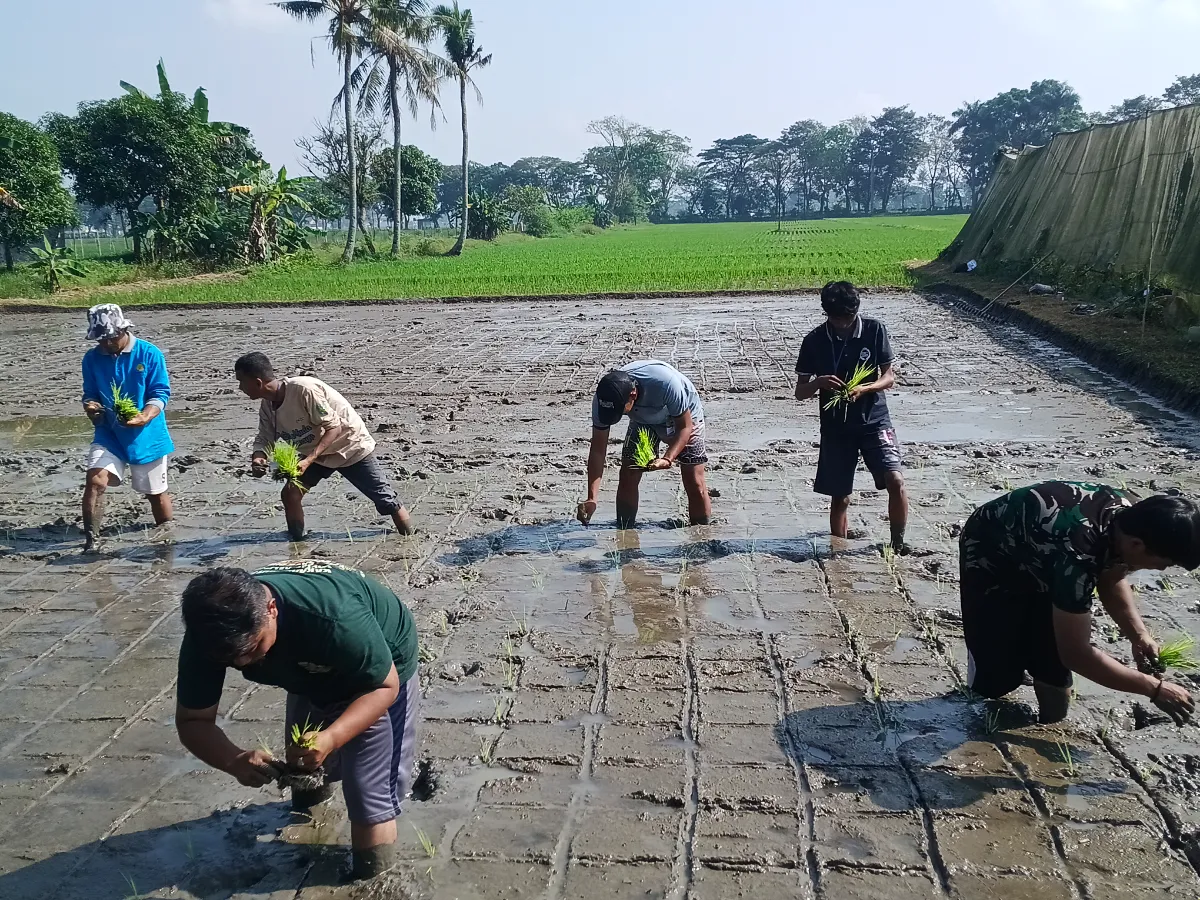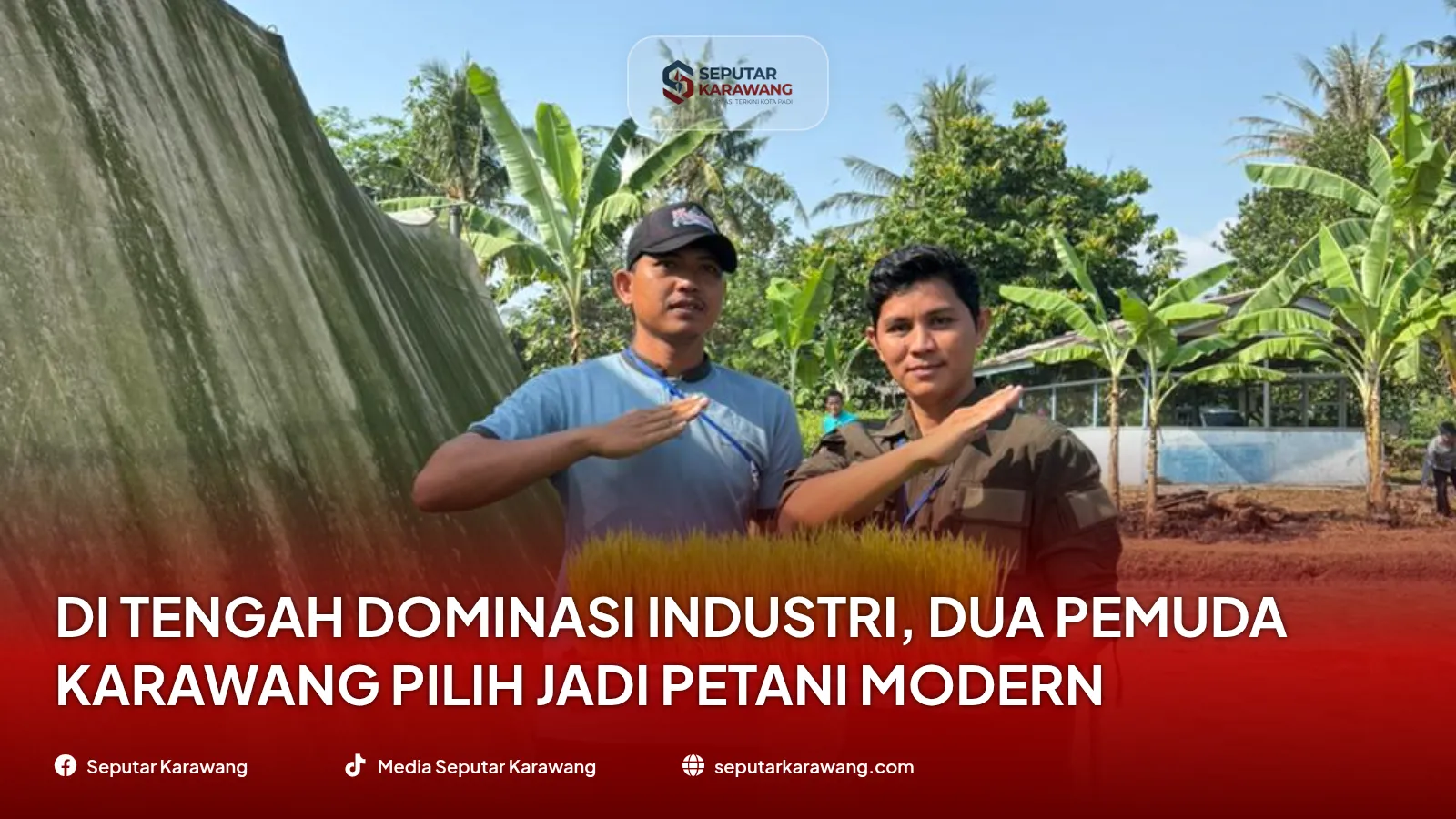
Seputarkarawang.com - Karawang, KARAWANG — Efforts to regenerate young farmers in Indonesia continue to show positive developments. Two millennial farmers from Karawang Regency, West Java, took part in climate-smart farmer training held at the West Java Province Horticulture Farmer Training Center as part of strengthening human resource capacity in the modern agricultural sector.The training focused on agricultural adaptation to climate change, sustainable land management, and effective and efficient rice cultivation practices. On the second day of the activity, participants were immediately sent to the rice fields to take part in the practice of planting rice directly.In the field session, participants received assistance from Edi Kusmana who provided material on rice planting techniques, soil processing, and strategies to increase agricultural productivity amidst increasingly dynamic weather changes.According to the presenters, the success of rice cultivation is determined by three main factors, namely the quality of varieties or seeds, the cultivation management system, and environmental and climate conditions. These three aspects are considered to be important foundations in building modern agriculture that is productive and resistant to the risk of extreme weather changes.
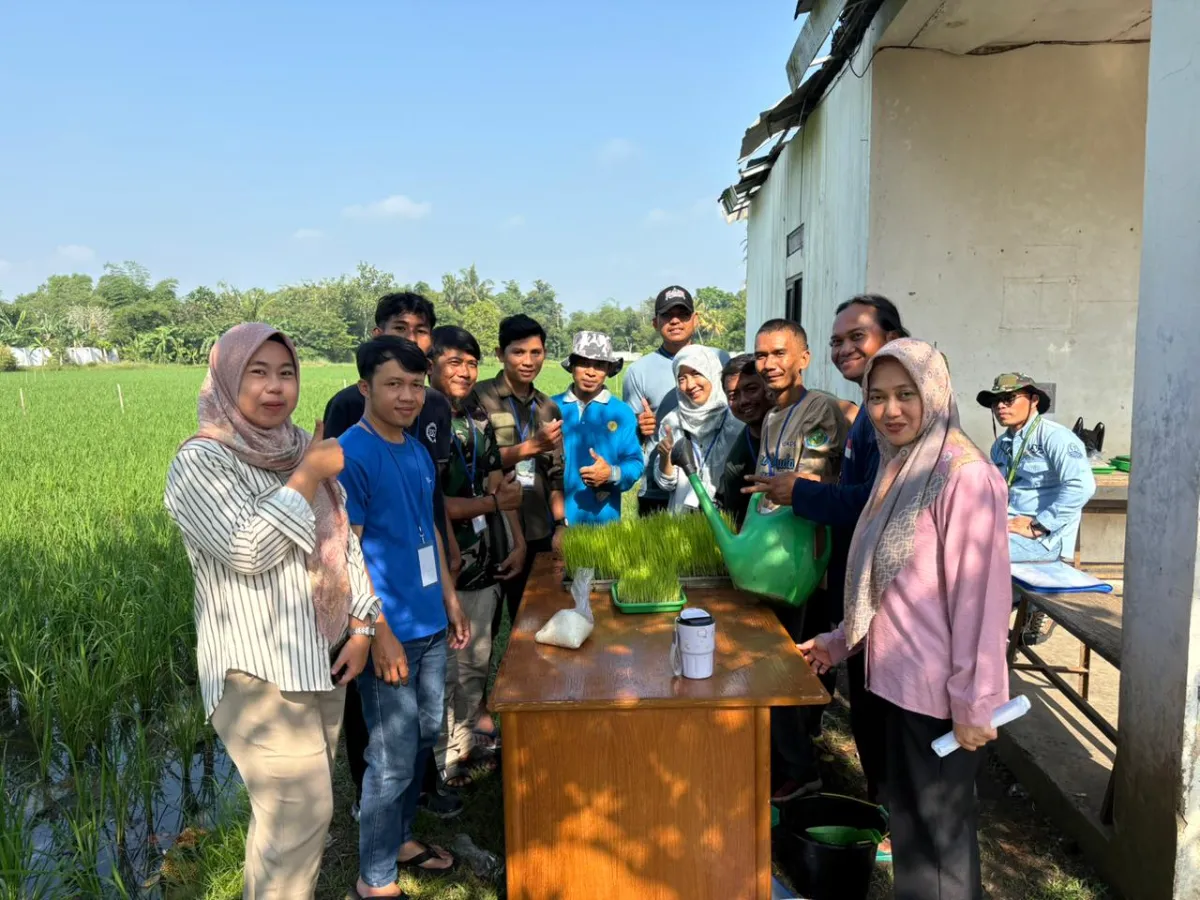
"Today's farmers must be able to adapt varieties to changing climate conditions. The world of agriculture is developing very quickly and farmers are required to continue learning," said Edi in the training session.One of the participants from Karawang, Nur, admitted that the training opened up new insights regarding climate-based agricultural systems. Even though he is currently focused on developing horticultural cultivation, he believes that rice farming still has great prospects if managed with a modern approach."This is a new experience for me. It turns out that agriculture is not only about planting, but also understanding the climate, land management and technology. Hopefully this knowledge can be applied in Karawang," he said.The presence of young farmers in the training is considered to be a breath of fresh air for the national agricultural sector, especially in food storage areas like Karawang. So far, most of the younger generation are more interested in working in the industrial sector than agriculture.In fact, amidst the challenges of food security and global climate change, farmer regeneration is an urgent need. It is believed that the involvement of young people in the agricultural sector will be able to bring about new innovations, including the application of smart farming and digital technology in cultivation systems.With the increasing participation of the younger generation, it is hoped that the agricultural sector will no longer be seen as a traditional job, but rather as a strategic field that has great economic opportunities and contributes directly to national food security.It is hoped that the enthusiasm of millennial farmers from Karawang will be an inspiration for other regions in producing a generation of modern farmers who are adaptive, innovative, and ready to face future agricultural challenges.